
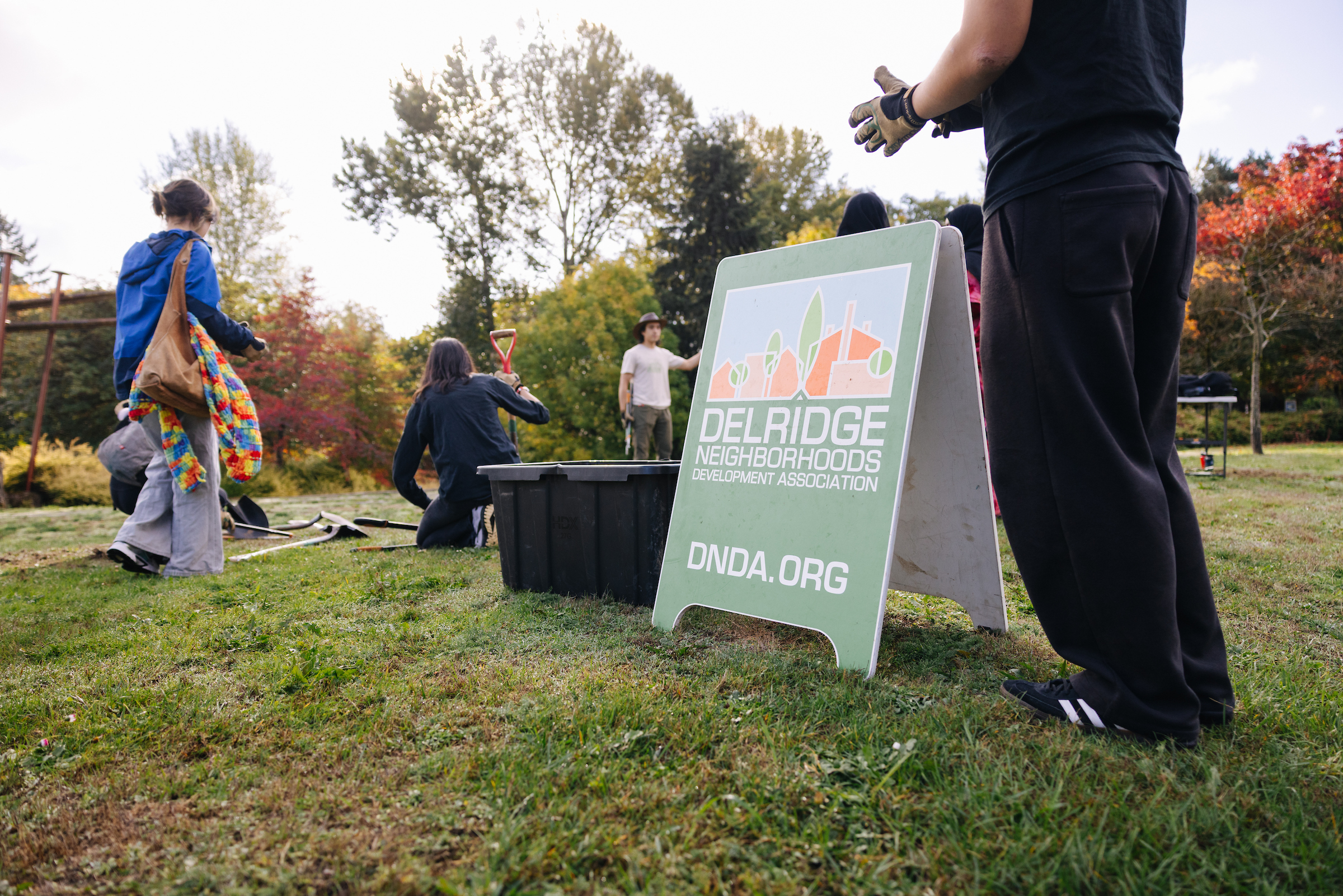
As volunteers pulled invasive blackberry bushes from a hillside near the Longfellow Creek Watershed in West Seattle on a recent Saturday morning, they showed how community action can make a difference.
The Delridge Neighborhoods Development Association (DNDA) organized the work party at Delridge Wetland Park, a half-acre site with wetlands that drain into Longfellow Creek. Like other volunteer efforts at the park, their labor of love is aimed to help reduce stormwater pollution and support the health of local salmon populations.
“By engaging neighbors and young people in hands-on environmental restoration, we’re building deeper connections to local ecosystems and the ability to take care of them,” says Ben Antonius, Restoration Program Manager for DNDA. “Our volunteers are helping improve the forests around Longfellow Creek and creating a long-lasting culture of stewardship.”

Volunteers remove invasive blackberry bushes from a hillside at Dragonfly Garden and Pavilion near the Longfellow Creek Watershed in West Seattle.
DNDA is just one of many community groups working to improve water quality in local waterways and Puget Sound with support from King County’s WaterWorks grants.
This year, King County Executive Girmay Zahilay and King County Council awarded $7.8 million in grants to 99 projects that advance the county’s mission to protect public health and the environment.
“Partnering with other organizations and agencies is essential to improving water quality in the region,” says Elizabeth Loudon, WaterWorks Grant Program Manager. “By investing in community-driven projects to restore and protect our local waterways, we are supporting environmental stewardship, public health, and clean water now and into the future.”

Volunteers work together to clear invasive blackberry bushes.
Managed by King County’s Wastewater Treatment Division, the WaterWorks grant program awards funding every two years to support community-led projects that improve water quality and further extend the division’s impact.
This round of grants supports a range of clean water investments, including paid youth opportunities to restore the Duwamish River, pocket forest parks along South Lake Union, and projects to reduce harmful algal blooms.
Over the past 10 years, WaterWorks grant recipients have made a measurable difference across the region:
- 24,000+ trees and 124,000 other plants planted
- 70 rain gardens and 189 cisterns or rain barrels installed
- 174,000+ community members engaged, including 84,000+ students
- 124,000+ volunteer hours contributed to community projects
Last year alone, community organizations:
- Installed six rain gardens and 30 cisterns or rain barrels to manage stormwater
- Planted nearly 800 trees and 4,700+ other plants to restore habitat
- Contributed 18,000+ volunteer hours
- Connected 23,000+ community members, including 13,000+ students

Volunteers head out for habitat restoration work.
The WaterWorks grant program is funded through the division’s operating budget. To ensure every grant dollar is spent in a way that leads to meaningful success for communities, our team works closely with grant recipients to support them with challenges during project implementation, monitor how funds are used, and track outcomes from each project. Grant recipients also contribute a portion of matching funds to the projects, as well as extensive volunteer time, amplifying the impact of county investments.
A decade of WaterWorks grants shows what’s possible when community partners have the resources to turn local priorities into action. From restoring habitat to managing stormwater and engaging the next generation of environmental stewards, these partnerships are helping improve the health of local rivers, lakes, streams, and Puget Sound.
Learn more about the grant program and other community projects it supports.
Discover more from King County Wastewater Treatment Division
Subscribe to get the latest posts sent to your email.